
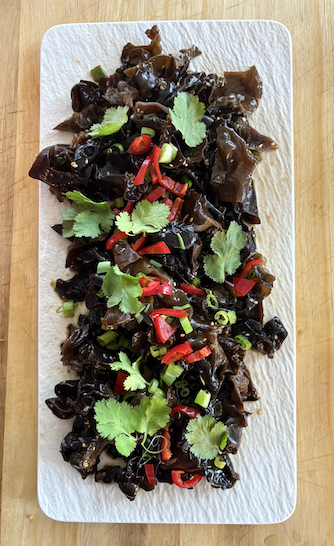
If you’ve ever bitten into a cold Chinese salad and wondered, “What is this crunchy, slippery, delicious black fungus?” — congratulations, you’ve met wood ear mushrooms (木耳, Mu Er in Mandarin). They may not win any beauty contests, but what they lack in looks, they make up for in incredible health benefits and culinary versatility. In Japanese cooking (木耳, kikurage in Japanese) it is the “black fungus” commonly used as a ramen topping especially with tonkotsu (pork bone) ramen.
Long used in Chinese home cooking and Traditional Chinese Medicine (TCM), these humble mushrooms are having a quiet superfood moment. I’ve just started actively adding it into our meals—and you might want to do the same.
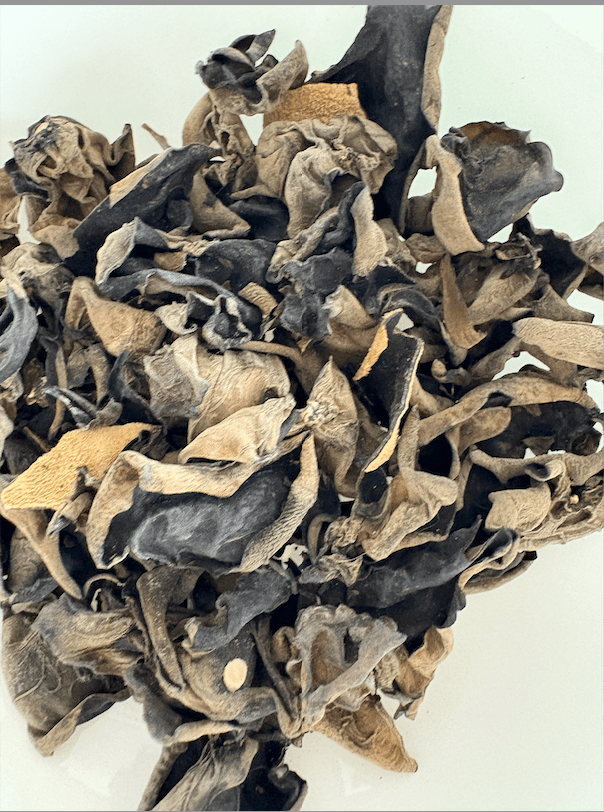
Wood ear mushrooms (木耳, Auricularia auricula-judae) are prized in traditional Chinese cuisine and medicine—not just for their crunchy texture and ability to absorb flavor, but also for their impressive nutritional and medicinal benefits. Here’s a breakdown of why they’re worth adding to your diet:
1. High in Fiber
- Excellent source of both soluble and insoluble fiber
- Supports gut health, relieves constipation, and helps regulate bowel movements
- Promotes satiety and may help with weight management
Wood ear is an unsung hero if you are on a high-fiber kick, trying to manage weight or wanting to give your microbiome a prebiotic boost
2. Blood Sugar Regulation
For anyone monitoring their blood sugar—whether managing prediabetes or just post-meal gluocse crashes—wood ear mushrooms are a fantastic addition to your plate. Think of it as low-GI, high-benefit crunch
- Fiber and polysaccharides in wood ear mushrooms help slow glucose absorption
- Early studies suggest potential to improve insulin sensitivity (Hobbs 2023)
- Useful for people with prediabetes or type 2 diabetes when paired with a balanced diet (Shamim 2023)
3. Heart & Circulatory Support
In Traditional Chinese Medicine (TCM), it’s said to “cool the blood”, and modern studies hint at mild natural anticoagulant properties. That means it may help:
- ✔️ Improve blood flow
- ✔️ Reduce clotting risk
- ✔️ Support healthy blood pressure (thanks to its potassium content)
(Important note: if you’re on blood thinners, don’t go overboard.)
4. Immune-Boosting Antioxidants
Wood ear mushrooms are rich in polyphenols, flavonoids, and melanin—potent antioxidants known for their role in reducing oxidative stress and inflammation. In traditional Chinese kitchens, they’ve long been valued for their immune-supportive properties, especially during recovery from illness or respiratory infections. While they’re not a magic cure, they’re certainly a time-honored staple in the immune-nourishing repertoire.
After the birth of each of my daughters, my mother would make me a classic Cantonese confinement soup—a warming broth infused with chicken, ginger, Chinese rice wine, and wood ear mushrooms. Even though she was a Western-trained doctor, she believed deeply in the restorative power of these traditional dishes. I sometimes wonder if I’ll find myself doing the same for my daughters one day—passing on not just the recipe, but the quiet comfort and care it represents. I had actually forgotten about this dish until writing this post, but in my research I found a blog post which has inspired me to make it sometime soon.
5. Natural Iron Source
Many plant-based iron sources just don’t absorb well—but wood ear is an exception. One cup provides about 6–8% of your daily iron needs, which is especially helpful for:
- ✔️ Vegetarians and vegans
- ✔️ Women with higher iron needs
- ✔️ Anyone who feels a bit run-down or low-energy
6. Hydrating & Detoxifying (TCM View)
According to Traditional Chinese Medicine, wood ear is especially good for those who are:
- Exposed to pollution or dry environments
- Recovering from illness
- Struggling with dryness or heat in the body
TCM practitioners say it helps to: “Moisten the lungs,” “Nourish yin,” and “Clear heat toxins”. I’m not really sure what that means but maybe that’s why I was craving this chilled wood ear with black vinegar salad during a particularly long New York heat wave.
Wood Ear Mushrooms with Black Vinegar & Chili Oil (凉拌木耳 | Cold Wood Ear Salad)
Serves: 2–4 | Time: ~20 minutes (including soaking)
Ingredients:
- 30g dried wood ear mushrooms (about 1 loosely packed cup)
- 2 tsp sesame oil
- 1 tbsp Chinese black vinegar (Chinkiang vinegar)
- 1 tbsp light soy sauce
- 1 tsp chili oil (adjust to heat preference; use Lao Gan Ma or homemade)
- 1 clove garlic, finely minced
- ¼ tsp sugar (optional and to taste)
- 1 tsp toasted sesame seeds
- 1–2 stalks spring onion, finely sliced
- Optional garnish: fresh cilantro or crushed peanuts
Instructions:
- Soak the mushrooms: Place dried wood ear mushrooms in hot water for 5-10 minutes or until fully rehydrated and plump.
- Blanch briefly: Add mushrooms to a pot of boiling water and blanch for 1–2 minutes to soften slightly.
- Cut the mushrooms: drain the mushrooms and cut them into bit sized pieces with scissors
- Make the dressing: In a small bowl, mix:
- 1 tbsp black vinegar
- 1 tbsp light soy sauce
- 1 tsp chili oil
- 2 tsp sesame oil
- ¼ tsp sugar (optional)
- 1 clove minced garlic
- Half the spring onions
- Toss to combine: In a mixing bowl, combine the cooled mushrooms and dressing. Toss well to coat. Let sit for 5–10 minutes to soak up the flavor.
- Finish & serve: Plate onto your serving dish and Sprinkle with sesame seeds and remaining spring onions.Garnish with cilantro or crushed peanuts if desired.
Tips:
- Serve cold or at room temperature as a side dish.
- This dish stores well in the fridge for up to 2–3 days and actually tastes better after marinating.
- Add sliced cucumber or carrot ribbons for extra crunch and color.
📊 Nutrition Snapshot (per 1 cup cooked, ~80g/ 30g dry):
- Calories: ~25–30
- Carbs: ~7g
- Fiber: ~3–5g
- Protein: ~1–2g
- Fat: 0g
- Iron: ~6–8% DV
- Potassium: ~200mg
- Also contains magnesium, copper, and small amounts of B vitamins
⚠️ Precautions
- Must be cooked before eating — raw wood ear may harbor bacteria
- Avoid excessive consumption if you are on blood thinners, due to mild anticoagulant effect
- Rinse thoroughly after soaking dried varieties to remove grit
References
- Hobbs C. The Health and Clinical Benefits of Medicinal Fungi. Adv Biochem Eng Biotechnol. 2023;184:285-356
- Shamim MZ, Mishra AK, Kausar T, Mahanta S, Sarma B, Kumar V, Mishra PK, Panda J, Baek KH, Mohanta YK. Exploring Edible Mushrooms for Diabetes: Unveiling Their Role in Prevention and Treatment. Molecules. 2023 Mar 21;28(6):2837.
 Weng's Culinary Adventures
Leave a comment