
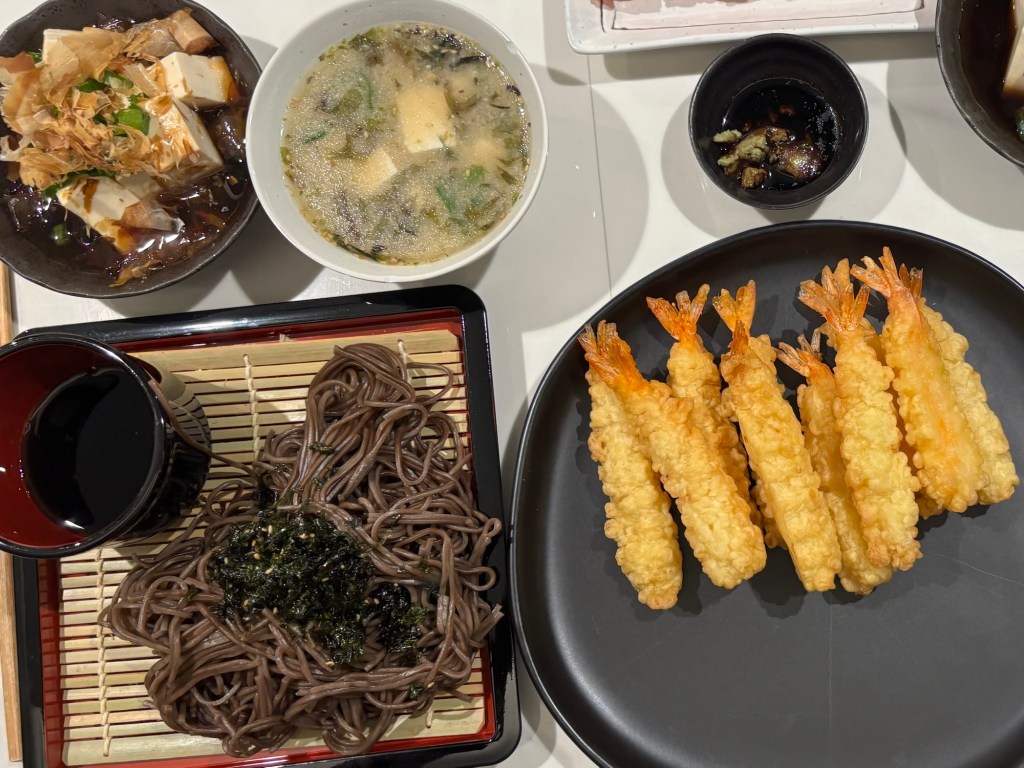
Happy New Year from Weng’s Culinary Adventures! Here’s to Twenty Twenty-Thrive—a year of delicious discoveries, heartwarming meals, and shared moments around the table. Let’s make 2025 a feast for the soul and the senses.
As I welcomed the new year, I embraced the Japanese tradition of enjoying soba noodles for my final meal of 2024—a symbol of longevity and resilience.
May this simple, meaningful tradition inspire us all to thrive in the year ahead.
Eating toshikoshi soba (年越しそば), or “year-crossing noodles,” on New Year’s Eve is a longstanding Japanese tradition with deep cultural and symbolic significance. Here’s what it represents:
1. Longevity and Resilience
The long strands of soba noodles symbolize a wish for a long and healthy life. Their durability and ease of breaking while eating also represent resilience and the ability to overcome hardships of the past year.
2. Letting Go of the Past
The act of cutting the noodles as you eat them symbolizes severing ties with the misfortunes or difficulties of the old year, allowing you to start fresh in the new year.
3. Simplicity and Humility
Soba noodles, made primarily from buckwheat, are a simple and humble food. This reflects the values of modesty and gratitude as the year ends.
4. Connection to Prosperity
In some interpretations, the thin, long shape of the noodles is associated with wealth, representing the hope for prosperity in the coming year.
Traditionally, toshikoshi soba is enjoyed during family gatherings on New Year’s Eve, highlighting themes of unity and togetherness. It’s a meaningful and comforting way to say farewell to the past year and welcome the new one with hope and strength.
May this simple, meaningful tradition inspire us all to thrive in the year ahead.


Leave a Reply