
I recently hosted a cooking class for a mother and her 7-year-old son. When planning meals for adults, my first step is always to ask about dietary restrictions and preferences. But when leading an individualized nutrition-focused cooking class, I typically start by exploring specific nutritional concerns. In this case, the mother was worried about her son’s height. She asked, “What can he eat to help him grow taller?”

Her question made me reflect on a familiar concern among Asian mothers. Height has long been a topic of worry, shaped by cultural, social, and health-related factors. My own mother was convinced I would be a dwarf. For the record, I’m 5’6”. I spent years trying to coax my petite eldest daughter into eating more. I hoped she’d gain an extra inch or two. She’s now aged 24 and 5’2”. I have no doubt that when my daughters have children of their own, they too will wonder whether their kids will reach their full height potential.
In many Asian cultures, height is often associated with success and attractiveness. It is also linked to opportunities, particularly in societies where parents are deeply invested in their child’s future. Generations affected by malnutrition have placed a strong emphasis on nutrition and healthcare advancements to help children grow taller. Add to that media influences, peer comparisons, and increasing awareness of growth-related science. It’s no surprise that parents today seek evidence-based dietary strategies to maximize their child’s growth.
As a mother, I saw a bright, engaged, and energetic child. As a doctor, I had no medical concerns. He appeared to be of a healthy weight and height. Notably, his mother was petite, so there will always be genetic limitations. As a home cook and menu planner, I saw her question differently. She was asking for help. “Can you help me create nutritious meals that my son (and family) will enjoy?”
But as a researcher, I was intrigued: What does the science actually say about childhood nutrition for optimal growth?
Key Nutrients for Growth
1. Protein: The Building Block of Growth
Protein is essential for tissue development, muscle growth, and the production of growth hormones. It is a critical component of a child’s diet. Research consistently shows that children who consume adequate protein tend to achieve better height outcomes compared to those with deficiencies. However, in environments where malnutrition is uncommon, excessive protein intake warrants caution. Overconsumption has been linked to an increased risk of obesity in adulthood. Evidence suggests that more isn’t always better when it comes to growth. [Arnesen 2022]
A cross-sectional study in Chinese children found that among well-nourished individuals, higher protein intake did not enhance linear growth. In some cases, it even impaired growth. This underscores the importance of balance and quality over sheer quantity. As with most aspects of nutrition, moderation is key. High-quality protein is crucial. However, excessive intake may do more harm than good. It can diminish rather than enhance the benefits for a child’s growth and overall health. [Xiong 2023]



- Best Sources: Eggs, chicken, fish, lean beef, dairy products, tofu, lentils, nuts, and seeds.
- Cookidoo recipe ideas:
2. Calcium & Vitamin D: Essential for Bone Health
Calcium strengthens bones, while Vitamin D enhances calcium absorption. Deficiencies in these nutrients are linked to poor bone growth and stunting [Bonjour 2011].



- Best Sources:
- Calcium: Milk, cheese, yogurt, almonds, leafy greens.
- Vitamin D: Fatty fish (salmon, sardines), egg yolks, fortified dairy, and sun exposure.
- Cookidoo recipe ideas:
3. Zinc: The Growth-Boosting Mineral
Zinc plays a crucial role in cellular growth and immune function. Research indicates that zinc supplementation in deficient children leads to improved height (Liu 2018). The World Health Organization (WHO) recommends zinc supplementation to improve linear growth in children under 5 years of age.



- Best Sources: Shellfish, lean meats, chickpeas, nuts, seeds, whole grains.
- Cookidoo recipe ideas:
4. Iron: For Oxygen Transport & Energy
Iron is necessary for red blood cell production and oxygen delivery to tissues. Deficiency can lead to stunted growth and fatigue (Oktarina 2024). Iron deficiency, however, is only prevalent in certain populations. These include those with fully plant-based diets, health conditions that affect iron absorption, or increase iron loss. It is also common in settings where malnutrition is prevalent.



- Best Sources: Lean red meat, poultry, fish, spinach, lentils, fortified cereals.
- Cookidoo recipe ideas:
5. Omega-3 Fatty Acids: For Bone & Joint Health
Omega-3s promote bone density and support growth hormone function (Erikkson 2009), but have numerous other health benefits, especially in its anti-inflammatory effects balancing out the pro-inflammatory effects of Omega-6 rich diets (see my earlier post on Canola Oil)


- Best Sources: Fatty fish, walnuts, flaxseeds, chia seeds.
- Cookidoo recipe ideas:
6. Vitamins A & C: For Cellular Growth & Immunity
Vitamin A supports bone remodeling, while Vitamin C aids collagen production and iron absorption.


- Best Sources:
- Vitamin A: Carrots, sweet potatoes, dairy, eggs, mangoes.
- Vitamin C: Lemons, oranges, strawberries, bell peppers, kiwis.
- Cookidoo recipe ideas:
- Fruity dream (Soft serve ice cream)
- Homemade lemonade or orange juice – this is a great recipe as it uses the entire citrus (including the peel, which is where all the polyphenols, fibre and vitamins are stored)
- Roasted Red Pepper and Walnut Dip (Muhammara)
What to Avoid
Certain foods can interfere with optimal growth:
- Excessive sugar & processed foods: Can disrupt hormone regulation and contribute to obesity.
- Caffeine & carbonated drinks: May inhibit calcium absorption.
- Highly restrictive diets: Ensure sufficient protein, calcium, and iron intake in vegetarian or vegan diets.
Other Factors for Growth
- Adequate Sleep: Growth hormone is primarily released during deep sleep.
- Regular Exercise: Activities like running, jumping, and stretching help bone strength.
- Hydration: Water supports digestion and nutrient absorption.
What About Fussy Eaters?
Providing a balanced, nutrient-dense diet is one of the best ways to support your child’s growth. Incorporate foods rich in protein, calcium, zinc, iron, omega-3s, and essential vitamins. Ensure they get good sleep and regular exercise. These can help them achieve their full height potential. Even with the best intentions, it can be challenging to optimally nourish fussy eaters. One strategy is to use “nutritional boosters” where you supplement a less nutrient dense meal with nutrient dense ingredients.
My Favourite Nutrition Boosters
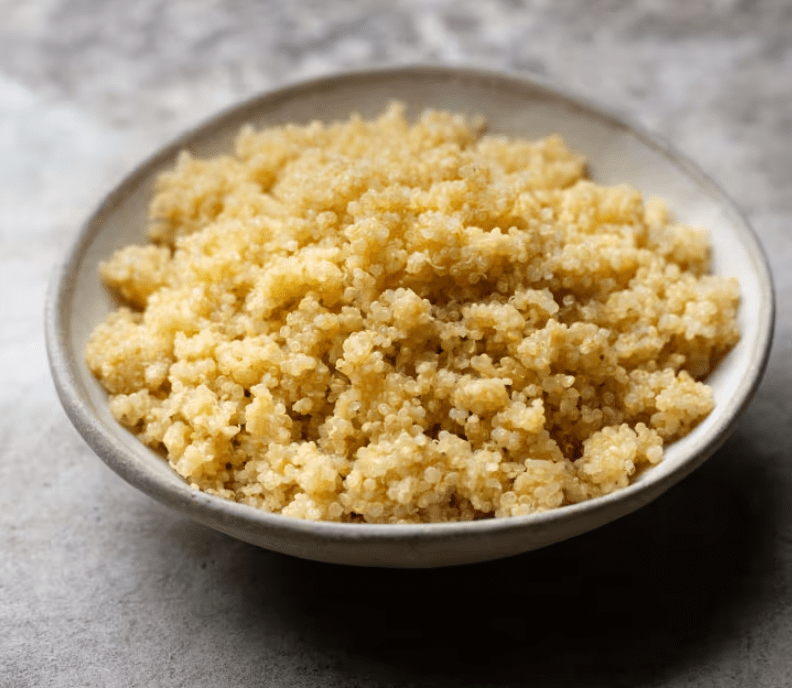


- Quinoa
- Cook quinoa in chicken broth and mix with white rice
- Chia seeds
- Make a berry chia jam to eat with white bread
- Superfood “Sprinkles”
- See my crispy chickpea sprinkles
- Caper crumbs made with stale whole grain bread, capers, almonds and lemon zest – goes well on any meat or vegetable
Another strategy is to “hide the good stuff”


- Blended soups like my favourite Cookidoo vegetable soup
- Smoothies like this chocolate cacao banana smoothie with hemp seeds
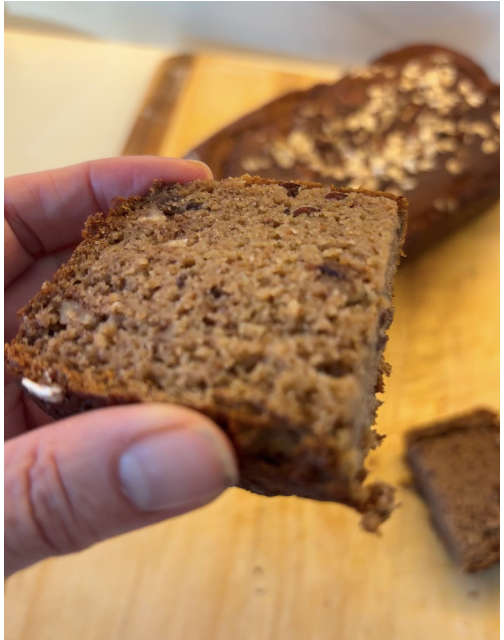
Almost any food can he “hacked” to make it more nutritious. One of my favorites is to hide it in a treat. I often use my banana bread recipe for this, which is not only delicious but also a nutritional powerhouse.
Ultimately, this is a first-world concern—most children will grow to the height they’re genetically meant to be. Yet, the desire to nourish our children as best as possible is a universal worry among caring mothers everywhere. Regardless of the outcome, the instinct to optimize their well-being remains a constant source of love and dedication.
I’d love to hear what strategies you use to nourish your fussy little eaters!
**Update to the post**
Even in the presence of optimal health and nutrition, a child’s height is largely determined by genetic factors. Studies suggest approximately 70-80% of a person’s height is determined by DNA. I’m adding this information to my post as a ressource for parents who might be wondering how a child’s genetic potential height can be estimated.
How Is a Child’s Adult Height Estimated?
Although 70-80% of a person’s height is determined by DNA, there are several widely used methods to estimate a child’s potential adult height. Here are some common “rule of thumb” approaches:
1. The “2×2” Rule
This traditional method suggests that doubling a child’s height at age 2 (or 18 months for girls) provides a rough estimate of their adult height. While this rule has been around for a long time, there is no scientific evidence supporting its accuracy. Parents often use it as a simple predictor, but it does not account for variations in growth spurts, especially during early childhood.
2. Mid-Parental Height Calculation:
This method estimates a child’s adult height based on parental heights:
- For boys: (Father’s height + Mother’s height + 5 inches [13 cm]) ÷ 2
- For girls: (Father’s height + Mother’s height – 5 inches [13 cm]) ÷ 2
While commonly used, this method provides only a general estimate and does not account for individual growth patterns.
3. Khamis-Roche Method
This approach incorporates a child’s current height, weight, age, gender, and the parents’ heights to predict future height. It is considered more accurate than the mid-parental height calculation because it accounts for other factors.
4. Growth Charts
Healthcare providers use pediatric growth charts to track a child’s height, weight, and head circumference over time. These charts help assess whether a child is growing within the expected range for their age and gender. Growth charts are typically standardized for local populations. As a result, they may be less reliable for children from migrant or ethnically diverse backgrounds.
When to Be Concerned
A significant deviation in a child’s percentile ranking on a growth chart—whether in height or weight—can indicate a need for further medical evaluation. If a child’s growth rate slows down or falls outside expected patterns, a healthcare provider may investigate underlying factors such as nutritional deficiencies, hormonal imbalances, or genetic conditions.
References
- Arnesen, Erik Kristoffer et al. “Protein intake in children and growth and risk of overweight or obesity: A systematic review and meta-analysis.” Food & nutrition research vol. 66 10.29219/fnr.v66.8242. 21 Feb. 2022
- Xiong, Ting et al. “Associations between High Protein Intake, Linear Growth, and Stunting in Children and Adolescents: A Cross-Sectional Study.” Nutrients vol. 15,22 4821. 17 Nov. 2023
- Bonjour, Jean-Philippe. “Calcium and phosphate: a duet of ions playing for bone health.” Journal of the American College of Nutrition vol. 30,5 Suppl 1 (2011): 438S-48S
- Liu, Enju et al. “Effect of Zinc Supplementation on Growth Outcomes in Children under 5 Years of Age.” Nutrients vol. 10,3 377. 20 Mar. 2018
- Oktarina, Caroline et al. “Relationship Between Iron Deficiency Anemia and Stunting in Pediatric Populations in Developing Countries: A Systematic Review and Meta-Analysis.” Children (Basel, Switzerland) vol. 11,10 1268. 19 Oct. 2024
- Eriksson, Susanne et al. “Fatty acid pattern in serum is associated with bone mineralisation in healthy 8-year-old children.” The British journal of nutrition vol. 102,3 (2009): 407-12
 Weng's Culinary Adventures
Leave a comment