
With the rise of Ozempic and other GLP-1 drugs, conversations about weight and wellbeing have taken on a new urgency — and a new complexity.
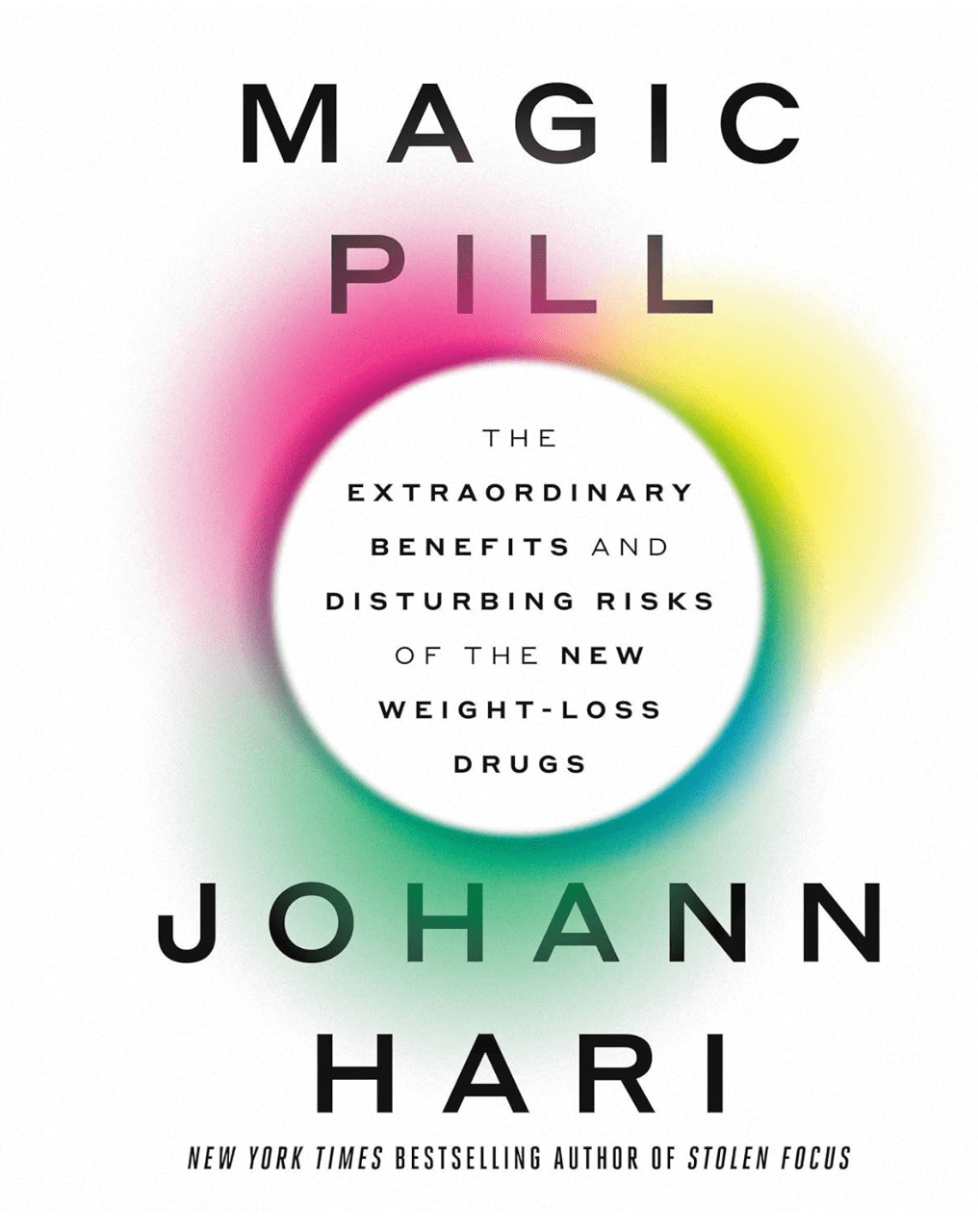
I downloaded the audiobook of Johann Hari’s Magic Pill (The Extraordinary Benefits and Disturbing Risks of the New Weight-Loss Drugs) after several acquaintances — all women aged between 40 and 70 — asked whether they should try a GLP-1 drug like Ozempic. None of them were obese or diabetic, but many wanted to “lose 10–20 pounds.” Within their social circles, “everyone seems to be taking it.” With online access now so effortless in the U.S., these medications have become both a trend and a temptation.
Their curiosity wasn’t only about health; it reflected deeper questions about body image, identity, and ageing. I realised I would likely be asked again, so I wanted to understand the broader story behind this so-called “magic pill.”
Johann Hari describes Ozempic as “a man-made fix for a man-made problem” — a phrase that lingered with me. It captures both the brilliance of modern pharmacology and the irony of our predicament: we built an obesogenic world and now need pharmaceutical restraint to navigate it. I found Hari’s commentary balanced, evidence-based, and elegantly written, distilling complex science into human, relatable terms. His voice is empathetic yet critical — a rare balance in discussions that often swing between moral panic and blind enthusiasm. While Magic Pill reads more as a personal journey than investigative journalism, its honesty makes it deeply accessible.
As a doctor, I’m wary of the allure of weight-loss drugs. I still remember when amphetamines were freely prescribed for slimming — once hailed as breakthroughs, later withdrawn for their harm. Every generation seems to find its “miracle,” until it doesn’t. Today’s GLP-1s are hopefully safer and more targeted, but the cultural pattern feels familiar: a collective yearning for quick fixes packaged as progress. And as with all drugs that act on the brain and body, we simply don’t yet know the long-term costs.
I appreciated Hari’s bio-psycho-social lens — a model I’ve always tried to instill in my medical students. This book is a masterclass in understanding why humans behave the way they do when it comes to their health. One passage that struck me was Hari’s admission that, even with his insights about ultra-processed / junk / fast foods, he continued to eat them while on the drug — just in smaller amounts. It was a sobering reminder that chemistry can suppress appetite, but not necessarily transform relationship. A drug that reduces quantity without changing quality isn’t a true fix; it merely quiets the symptoms of a deeper social disorder. Hunger isn’t just biological — it’s cultural and emotional. Real change requires re-engaging with food: its preparation, its provenance, and the pleasure it brings.
Hari’s chapter on Japan’s food revolution was particularly illuminating. I’ve visited Japan many times and am an ardent admirer of its cuisine, yet I had no idea how deliberate its anti-obesity culture had been. The Japanese government reshaped its national diet through widespread nutritional education, portion mindfulness, and a social ethos that celebrates balance. It showed that sustainable change can come from cultural transformation, not chemistry alone.
Even though I was born in Asia, I was raised in Australia and have always considered myself quite Westernised. Yet when I arrived in the U.S. in 2019, I was culture-shocked by the food environment. The abundance, portion sizes, and hyper-convenience were astonishing. I quickly realised that if I didn’t adapt, I could easily become another statistic in the American obesity epidemic. That shock, in hindsight, became the catalyst for my Culinary Adventures — cooking as both resistance and reconnection. It reminded me that preparing food from scratch isn’t just about nutrition; it’s an act of mindfulness, identity, and self-care. It’s also a quiet rebellion against a food system that profits from disconnection.
I finished Magic Pill not opposed to GLP-1s, but more cautious and nuanced. These medications can transform lives when used appropriately, but their use as lifestyle enhancers blurs the line between health and conformity. For my friends, I would now say: if the goal is health, seek medical guidance; if it’s insecurity, seek understanding — and please, learn to cook!
Ultimately, Hari’s book reinforced what I’ve long believed: true wellbeing isn’t found in a syringe or measured by a number on the scale. It’s found in connection, curiosity, and compassion — and, for me, in the simple, grounding act of cooking. In an age of shortcuts, returning to the kitchen isn’t nostalgic — it’s revolutionary.


 Weng's Culinary Adventures
Leave a reply to Weng Yee Chin Cancel reply